




If you’ve ever searched for an “anti static bag alternative” or wondered “are anti static bags necessary,” this comprehensive guide covers everything you need to know – from when you actually need them to the best substitutes available.
TOC Table of Contents
1. Introduction
If you’ve ever found yourself asking “are anti static bags necessary” or searching for an “anti static bag alternative”, you’re not alone. These are among the most common questions in electronics handling and shipping. The short answer is: it depends entirely on what you’re protecting, where you’re sending it, and how it’s being handled.
This comprehensive guide will explain everything you need to know – from whether you actually need anti-static bags to what alternatives actually work.
2. What Exactly Is an Anti-Static Bag?
Before we dive into alternatives, it’s crucial to understand what anti-static bags actually do – and more importantly, what they don’t do.
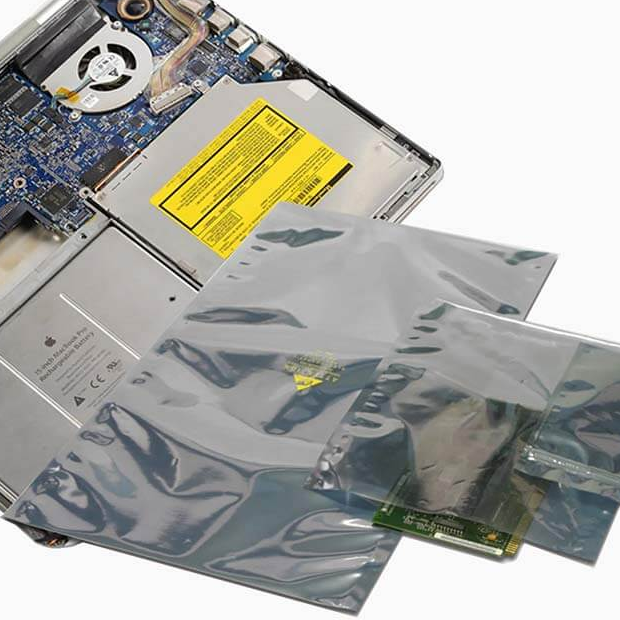
Anti-static bags (typically pink or blue polyethylene) are designed to prevent the build-up of static electricity on the bag itself. The material contains additives that eliminate the hazard of static damage during packaging, storing, and shipping. They won’t generate or hold a triboelectric charge, so they won’t introduce static into a controlled environment.
⚠ CRITICAL WARNING:
Pink anti-static bags should never be used as the sole packaging to protect sensitive electronic components from electrostatic discharge. Unlike static shielding bags, they don’t create a Faraday cage. They do NOT protect against external ESD events.
So when people search for “anti static bag alternative,” they’re often actually looking for an alternative to static shielding protection – not just anti-static properties.
3. Are Anti-Static Bags Necessary? (By Scenario)
✓ When You DON’T Need Anti-Static Bags
- Non-ESD-sensitive parts like nuts, bolts, screws, manuals, or cables.
- Components that are already fully enclosed in ESD-safe shielding.
- Items handled exclusively within an EPA (ESD Protected Area) where the entire environment is static-controlled.
- Low-value items where the cost of protection exceeds the value of the part.
✓ When You DO Need Anti-Static (or Shielding) Bags
- Shipping or transporting ESD-sensitive electronics outside a controlled environment.
- Storing sensitive components like motherboards, hard drives, microchips, or PCBs.
- Handling components that could be damaged by static discharge as low as 10 volts – far below what humans can feel or see.
- Meeting compliance requirements like MIL-PRF-81705 for military electronics.
The reality is that ESD damage is often invisible and cumulative. A component might not fail immediately but could have a shortened lifespan due to microscopic damage from static events.
4. Anti-Static Bag Alternatives: What Actually Works
If you’re out of anti-static bags or looking for a substitute, here are your options – ranked from best to worst:
1. Static Shielding Bags (The Proper Alternative)
This isn’t really an “alternative” – it’s the correct solution for sensitive electronics. Static shielding bags (the silver/metallized ones) create a Faraday cage that protects contents from external ESD events.
- Best for: Shipping and storing any ESD-sensitive electronics.
- Pros: Full ESD protection, meets industry standards.
- Cons: More expensive than pink anti-static bags.
2. ESD-Safe Paper Bags (The Sustainable Alternative)
Award-winning innovation in ESD packaging: paper-based anti-static bags made from 100% recycled paper. These have a significantly lower volume resistance than many plastic bags and are fully recyclable. Unlike plastic anti-static bags, paper ESD bags don’t have an “expiry date” – their discharge capacity is permanent.
- Best for: Eco-conscious businesses, regions with plastic bag restrictions.
- Pros: Sustainable, recyclable, permanent static protection.
- Cons: Newer technology, may not be as widely available.
3. Aluminum Foil + Paper (The DIY Faraday Cage)
A common frugal trick: wrap the item first in newspaper or paper, then in aluminum foil. The foil acts as a conductive shield (Faraday cage) while the paper prevents component legs from poking through.
- Best for: Emergency situations, one-off shipping, hobbyist use.
- Pros: Readily available, inexpensive.
- Cons: Not professional-grade, risk of short circuits if foil touches exposed contacts, no ESD certification.
⚠ Caution: Make sure component legs don’t poke through the foil. Also avoid using polystyrene foam with foil – polystyrene generates static and can cause problems if the foil tears.
4. ESD-Safe Foam and Bubble Wrap
Anti-static bubble wrap and ESD-safe foam provide cushioning while reducing static generation. These are typically used as secondary packaging rather than primary ESD protection.
- Best for: Physical protection + basic static control.
- Pros: Good mechanical protection, reusable.
- Cons: Doesn’t provide Faraday cage shielding.
5. Conductive Corrugated Cardboard / ESD Boxes
Conductive corrugated containers allow static charges to be safely dissipated when grounded. These are ideal for storing larger items or shipping multiple components.
- Best for: Bulk storage, shipping assembled products.
- Pros: Rigid protection, reusable.
- Cons: Bulkier than bags.
6. Biodegradable Anti-Static Bags
Made from renewable resources like corn and potato starch, these eliminate petroleum-based materials while providing superior static protection. They’re 100% biodegradable in water.
- Best for: Environmentally conscious businesses.
- Pros: Sustainable, effective static protection.
- Cons: Higher cost, check local regulations on biodegradable packaging.
7. Rayon or Bamboo Fabric
Some users report success using rayon (made from bamboo) as a static-proof material for protecting electronics. Wood (and bamboo) doesn’t conduct electricity.
- Best for: Wrapping items during storage or cleaning.
- Pros: Reusable, dust-resistant.
- Cons: Not a certified ESD solution, no Faraday cage protection.
5. Quick Reference Comparison
6. What DOES NOT Work
- Regular plastic bags – They generate static.
- Standard bubble wrap – Generates static; only use anti-static versions.
- Newspaper alone – No ESD protection.
- Pink anti-static bags for shipping sensitive electronics – They don’t shield from external ESD.
7. The Bottom Line
Are anti-static bags necessary? Only if:
- You’re handling ESD-sensitive electronics.
- You’re working outside a fully controlled ESD environment.
- You need to meet compliance standards.
For most people shipping or storing electronics – the short answer is yes, you need some form of ESD protection. But that doesn’t always mean pink anti-static bags. In fact, for sensitive components, pink anti-static bags are often insufficient.
★ The Golden Rule:
Understand what you’re protecting and where it’s going. If it’s an ESD-sensitive component leaving a controlled environment, it needs proper shielding – not just an anti-static bag.
Originally published on ZXCOOL Official Blog. All rights reserved.



Leave a Reply