




- 1. What Are Anti-Static Bags?
- 2. Why Do Electronics Need Anti-Static Bags?
- 3. Four Levels of ESD Protection
- 4. What Are Anti-Static Bags Made Of?
- 5. Industry Standards
- 6. Common Applications
- 7. How Long Do Anti-Static Bags Last?
- 8. How to Choose the Right Bag
- 9. Anti-Static vs. Static Shielding
- 10. Industry Trends & Future Outlook
1. What Are Anti-Static Bags?
An anti-static bag is a packaging material engineered to minimize or eliminate the accumulation of static electric charge on its surface. When two surfaces come into contact and separate, electrons can transfer from one surface to the other, creating a static charge. Anti-static bags are designed to prevent this phenomenon — known as triboelectric charging — from occurring on the bag itself.
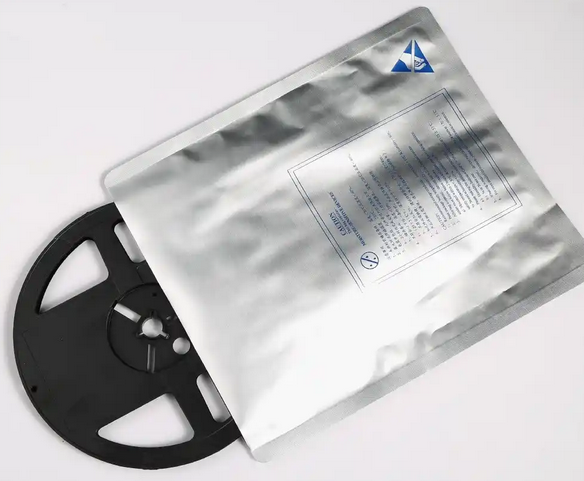
In technical terms, anti-static bags are defined by their surface resistivity. ESD protective materials are typically categorized into three types based on their surface resistivity (measured in ohms per square): insulating (>1×10¹² Ω/sq), static dissipative (≥1×10⁵ Ω/sq to <1×10¹² Ω/sq), and conductive (<1×10⁵ Ω/sq). Anti-static bags specifically have a surface resistivity of < 1×10¹² ohms per square, a property that allows charges to bleed off safely rather than building up on the bag’s surface.
It’s important to note that anti-static properties are often a temporary surface treatment. Many anti-static bags use chemical additives that migrate to the surface and absorb moisture from the air to reduce static buildup. This means their effectiveness is highly dependent on ambient humidity and may degrade over time.
2. Why Do Electronics Need Anti-Static Bags?
To understand why anti-static bags are essential, you need to understand Electrostatic Discharge (ESD) — the sudden flow of electricity between two electrically charged objects.
Imagine walking across a carpeted floor on a dry winter day. When you reach for a metal doorknob, you feel a sudden shock. That same phenomenon — on a much smaller but far more destructive scale — happens when static electricity discharges into sensitive electronic components.
ESD events can cause three types of damage:
- Catastrophic failure — The component is immediately destroyed and stops functioning.
- Latent defect — The component is partially damaged and remains functional, but its lifespan is dramatically shortened. This is the most dangerous type because the failure occurs after the product has reached the end user.
- Upset failure — The component malfunctions temporarily but resumes normal operation, which can be disastrous in safety-critical systems.
For context, the global electrostatic discharge packaging market was valued at USD 2.68 billion in 2025 and is projected to grow to USD 4.41 billion by 2034, at a compound annual growth rate (CAGR) of 5.68%. This growth reflects the increasing complexity and sensitivity of modern electronics and the corresponding demand for reliable ESD protection throughout the supply chain.
Anti-static bags serve as the first line of defense against ESD during storage, handling, and transportation. However — and this is critical — not all anti-static bags provide the same level of protection.
3. The Four Levels of ESD Protection: Anti-Static, Dissipative, Conductive, and Shielding
One of the most common sources of confusion in the ESD packaging industry is the distinction between anti-static, static dissipative, conductive, and shielding bags. Understanding these differences is crucial for selecting the right packaging for your application.
| Property | Anti-Static | Static Dissipative | Conductive | Static Shielding |
|---|---|---|---|---|
| Surface Resistivity (Ω/sq) | < 1×10¹² | 1×10⁵ – <1×10¹² | < 1×10⁵ | Varies |
| Prevents Charge Buildup | ✓ | ✓ | ✓ | ✓ |
| Shields External ESD | No | No | Partial | ✓ (Faraday Cage) |
| Typical Color | Pink/Red | Pink | Black/Silver | Metallic/Silver |
| Use Outside EPA | No | No | Limited | Yes |
4. What Are Anti-Static Bags Made Of?
The material composition of anti-static bags varies depending on the level of protection required. Here are the most common materials:
- Polyethylene with Anti-Static Additives – LDPE/LLDPE blow-molded with tertiary amines, quaternary ammonium salts (0.1%-0.7% by weight). Standard for pink bags.
- Metallized Films – Aluminum layer embedded in PET/PE laminate, forming a Faraday cage for shielding bags.
- Carbon-Loaded Materials – Carbon black or carbon fibers provide permanent, humidity‑independent conductivity.
- Biodegradable Options – Compostable polymers with anti-static properties for sustainable packaging.
5. Industry Standards for Anti-Static Bags
Any legitimate ESD packaging manufacturer should certify their products against recognized industry standards. Here are the standards you need to know:
- ANSI/ESD S20.20 – Foundational ESD control program standard.
- MIL-PRF-81705 – U.S. military spec for barrier materials (Type III, Class 2 for shielding bags).
- EIA-541 – Packaging material standards for ESD-sensitive items.
- ANSI/ESD S541 – Packaging requirements for transportation outside EPA.
- JEDEC J-STD-033B – Handling of moisture/reflow sensitive SMDs.
- EIA-583 / JESD625-A – Moisture-sensitive devices & ESD handling.
✅ Certification Checklist for Buyers: ANSI/ESD S20.20, MIL-PRF-81705, EIA-541, ANSI/ESD S541, RoHS, EIA-583/JESD625-A.
6. Common Applications of Anti-Static Bags
- PCB Assembly & Manufacturing
- Semiconductor (IC, microprocessors)
- SMT components / reels
- Aerospace & Defense (MIL-PRF-81705)
- Medical device electronics (ISO 13485)
- Automotive electronics (ECU, ADAS)
- Data centers & server manufacturing
7. How Long Do Anti-Static Bags Last?
- Standard pink anti-static bags: 3–6 months (humidity dependent).
- Metallized static shielding bags: Permanent Faraday cage protection (seal integrity matters).
- Carbon-loaded conductive bags: Permanent anti-static property.
8. How to Choose the Right Anti-Static Bag
Five-Step Selection Process:
- Identify your application environment (inside EPA or shipping outside).
- Determine ESD sensitivity level of components (some fail at 50V).
- Consider additional requirements (moisture barrier? MSL rating?).
- Select correct size & closure type (ziplock, heat-seal, open-top).
- Verify supplier certifications (test reports, compliance docs).
| Mistake | Consequence | Correct Solution |
|---|---|---|
| Using pink bags for shipped products | External ESD can damage components | Use static shielding bags |
| Assuming all pink bags are equal | Surface resistivity varies widely | Verify specs (10⁸–10¹¹ Ω/sq) |
| Reusing without testing | Additives degrade over time | Replace after 3-6 months or test |
9. Anti-Static vs. Static Shielding — What’s the Difference?
Anti-Static Bag (Pink): Prevents static generation on the bag itself, provides no shielding against external ESD, safe only inside EPA.
Static Shielding Bag (Metallized): Prevents static generation AND shields from external ESD via Faraday cage, safe for use outside EPA (shipping).
10. Industry Trends and Future Outlook
- Global ESD packaging market to grow by USD 861.82 million by 2032 (CAGR 7.70%).
- Nearly 50% of Google searches now show AI-generated summaries (GEO optimization is critical).
- Emerging needs: flexible displays, EV battery modules, ADAS sensors.
- Sustainability as key differentiator – biodegradable anti-static materials gaining traction.
Conclusion
Understanding anti-static bags is essential for anyone handling, storing, or shipping sensitive electronic components. The choice is not just about preventing immediate damage but about ensuring long-term reliability. To summarize: anti-static bags prevent charge buildup; static shielding bags provide comprehensive Faraday cage protection; always rely on industry standards (ANSI/ESD S20.20, MIL-PRF-81705) and verify supplier certifications.
This guide was prepared by the technical team at ZXCOOL, a manufacturer of ESD-safe and anti-static packaging solutions for global electronics, semiconductor, and aerospace industries.