



Description
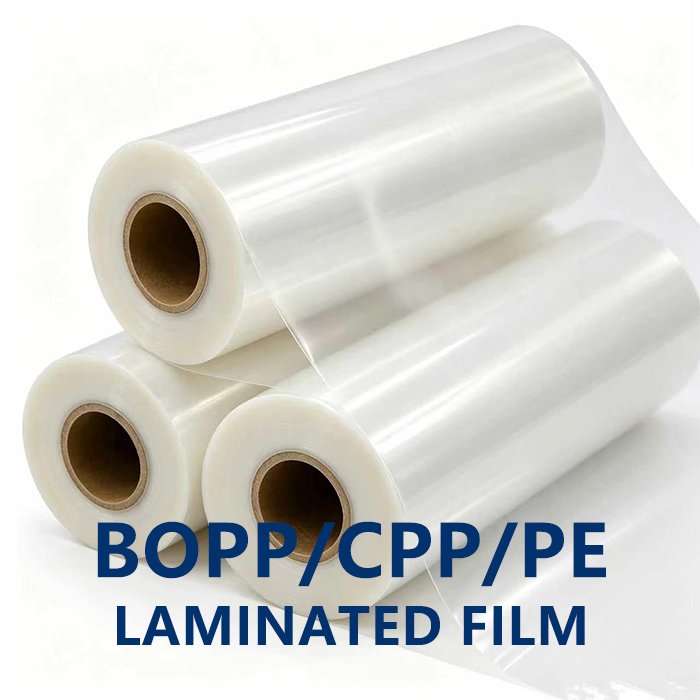
BOPP/CPP/PE Laminated Film is a three-layer flexible packaging structure combining biaxially oriented polypropylene (BOPP), cast polypropylene (CPP) and polyethylene (PE). Each layer can be selected to perform a different function within the finished packaging material.
BOPP forms the outer layer and contributes stiffness, dimensional stability and packaging appearance. CPP provides an intermediate polypropylene-based layer with flexibility and sealing characteristics, while PE can provide the inner heat-sealing surface and additional flexibility.
This multilayer construction can be considered for packaging manufacturers that require more flexibility in balancing outer-film performance, sealing behavior and overall package characteristics than a simple two-layer laminate can provide.
What Is BOPP/CPP/PE Laminated Film?
BOPP/CPP/PE consists of three polymer film layers:
BOPP / CPP / PE
- BOPP: outer layer providing stiffness, dimensional stability and a suitable packaging surface.
- CPP: intermediate polypropylene-based layer contributing flexibility and sealing characteristics.
- PE: inner layer providing flexibility and heat-sealing performance.
The exact performance of the finished laminate depends on the film grades, thicknesses, lamination process and intended packaging application.
How the Three Layers Work Together
BOPP Outer Layer
BOPP is used as the outer layer where a relatively stiff and stable packaging surface is required. It can also provide a suitable surface for packaging graphics depending on the selected grade and printing process.
CPP Middle Layer
CPP can be incorporated as an intermediate polypropylene-based film layer to modify the mechanical and sealing characteristics of the laminate. Its role can vary according to the specific film grade and overall construction.
Using CPP as a separate layer also allows the packaging structure to be designed around the characteristics required by the converting process.
PE Inner Layer
PE forms the inner side of the structure and provides the heat-sealing surface for suitable packaging applications. PE can also contribute flexibility to the finished laminate.
In simple terms:
- BOPP: outer appearance, stiffness and dimensional stability
- CPP: intermediate polypropylene-based functional layer
- PE: inner flexibility and heat sealing
BOPP/CPP/PE Three-Layer Structure
| Layer | Material | Primary Function |
|---|---|---|
| Outer Layer | BOPP | Provides stiffness, dimensional stability and the outer packaging surface. |
| Middle Layer | CPP | Contributes flexibility and polypropylene-based film characteristics. |
| Inner Layer | PE | Provides flexibility and heat-sealing performance. |
Why Use Three Layers Instead of Two?
A two-layer laminate can be sufficient for many packaging applications, but some projects require more control over the relationship between outer-film properties, flexibility and sealing performance.
A three-layer structure allows different films to be assigned different functions. Instead of asking one inner film to provide every required property, CPP and PE can be combined within the construction to achieve the characteristics required by the packaging application.
This makes BOPP/CPP/PE useful for projects where a simple BOPP/PE structure does not provide the preferred balance of processing and finished-package characteristics.
Key Characteristics
| Property | Contribution of the Structure |
|---|---|
| Outer Stiffness | BOPP provides a relatively stiff and stable outer film. |
| Dimensional Stability | The oriented BOPP outer layer contributes dimensional stability during converting. |
| Flexibility | CPP and PE can contribute flexibility to the inner portion of the structure. |
| Heat Sealing | PE provides the inner heat-sealable surface for suitable packaging processes. |
| Multilayer Design | Three separate film layers provide more flexibility when designing the packaging structure. |
BOPP/CPP/PE vs. BOPP/PE
The main difference is the additional CPP layer. BOPP/PE uses two films, while BOPP/CPP/PE uses three layers to provide more options when balancing the properties of the laminate.
| Consideration | BOPP/CPP/PE | BOPP/PE |
|---|---|---|
| Number of Layers | 3 | 2 |
| Outer Layer | BOPP | BOPP |
| Additional Layer | CPP | None |
| Inner Layer | PE | PE |
| Design Flexibility | More options for adjusting layer functions | Simpler two-layer construction |
BOPP/CPP/PE vs. BOPP/CPP
Both structures contain BOPP and CPP, but BOPP/CPP/PE adds a separate PE inner layer. This can be useful when the packaging project requires a specific PE sealing surface or additional flexibility.
| Feature | BOPP/CPP/PE | BOPP/CPP |
|---|---|---|
| Structure | BOPP / CPP / PE | BOPP / CPP |
| Number of Layers | 3 | 2 |
| Inner Material | PE | CPP |
| Sealing Layer | PE | CPP |
| Structure Design | Three-layer construction with separate CPP and PE layers | Simpler two-layer construction |
Applications of BOPP/CPP/PE Laminated Film
BOPP/CPP/PE can be evaluated for flexible packaging applications where a multilayer structure is required.
- Flexible packaging bags
- Packaging pouches
- Dry product packaging
- Consumer product packaging
- Printed packaging
- General flexible packaging applications
The appropriate film structure should be selected according to the packaged product, filling process, sealing equipment and required finished-package performance.
Printing and Converting
The BOPP outer layer can be used for suitable packaging printing applications. Film surface treatment, ink compatibility and the selected printing method should be considered during product development.
The laminated film can be supplied in roll form for further operations such as slitting, bag making and pouch production.
Custom BOPP/CPP/PE Laminated Film
| Customization | Available Options |
|---|---|
| Film Structure | BOPP / CPP / PE |
| Total Thickness | Customized according to application requirements |
| Film Width | Customized according to converting requirements |
| Roll Length | Customized according to order requirements |
| Printing | Custom printing according to packaging artwork |
What Information Should You Provide for a Quote?
- Packaging application
- Required film structure
- Total film thickness
- Film width
- Roll length
- Printing requirements
- Finished bag or pouch dimensions
- Sealing method
- Packaging machine information
- Estimated order quantity
Frequently Asked Questions
What is BOPP/CPP/PE laminated film?
BOPP/CPP/PE is a three-layer flexible packaging structure consisting of BOPP, CPP and PE. BOPP forms the outer layer, CPP provides an intermediate functional layer, and PE forms the inner heat-sealing layer.
Why add CPP between BOPP and PE?
A separate CPP layer can provide additional flexibility in designing the mechanical and processing characteristics of the laminate. The exact benefit depends on the selected film grades and the intended packaging application.
Is BOPP/CPP/PE heat sealable?
Yes. The PE inner layer provides the heat-sealing surface when the selected material and sealing conditions are appropriate for the packaging process.
Can BOPP/CPP/PE be printed?
Yes. The BOPP outer layer can be used for suitable packaging printing applications according to the selected film grade and printing process.
Can the thickness of each layer be customized?
Layer thickness can be discussed according to the required structure, film performance and production requirements. The final specification should be confirmed according to the intended application.
Request a Quote for BOPP/CPP/PE Laminated Film
If you are sourcing BOPP/CPP/PE laminated film for flexible packaging production, send ZXCOOL your required structure, thickness, width, roll length, printing requirements and intended application.
Contact ZXCOOL to discuss your BOPP/CPP/PE laminated film requirements and request a customized quotation.

Reynolds –
We’ve had this BOPP/CPP/PE laminate on our snack lines for about four months now – I’m the purchasing guy for a small nut company in California, so I’m always chasing cost savings. This came in roughly 20% cheaper than our old US supplier, so I figured why not try a roll. Honestly, I half-expected seal issues or sloppy print registration, but it’s run surprisingly clean. Our rotogravure prints are sharp, and the bags don’t puncture during cross-country shipping. Only minor annoyance: we had to tweak the forming tube tension, but that was a one-time setup. Shipping takes a couple extra weeks, but order ahead and you’re fine. For the price, it’s a solid workhorse.