



Description
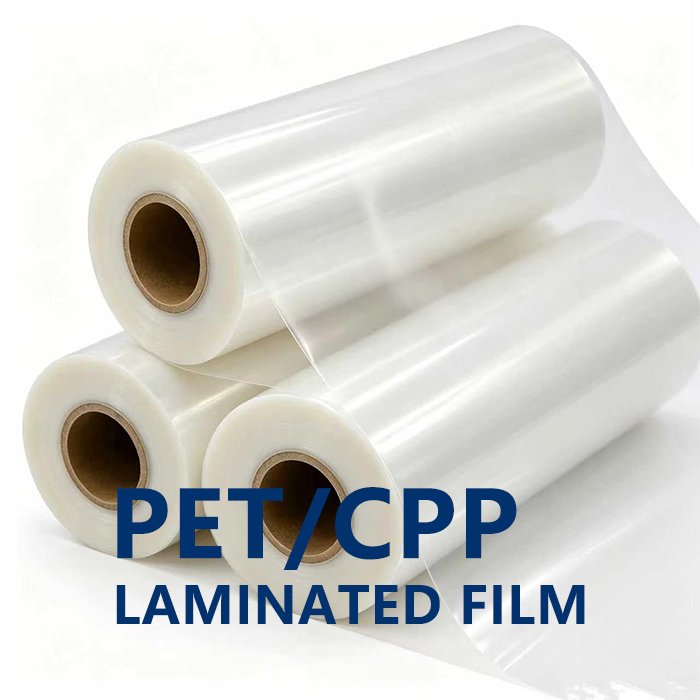
PET/CPP Laminated Film is a two-layer flexible packaging material that combines polyethylene terephthalate (PET) as the outer layer with cast polypropylene (CPP) as the inner layer. The two films perform different functions within the laminate: PET provides a stable and durable outer surface, while CPP provides flexibility and heat-sealing performance.
This structure can be considered for flexible packaging projects where the outer film requires good dimensional stability and appearance while the inner layer needs to provide a suitable sealing surface. PET/CPP laminated film can be supplied in roll form for further converting into bags, pouches and other flexible packaging products.
What Is PET/CPP Laminated Film?
PET/CPP laminated film consists of two different polymer films:
PET / CPP
PET, or polyethylene terephthalate, is commonly used as the outer film because of its strength, dimensional stability, clarity and smooth surface.
CPP, or cast polypropylene, is commonly used as the inner layer because it provides flexibility and heat-sealing performance.
By combining the two materials, the laminate can use the properties of PET where a stable outer layer is needed and CPP where a flexible sealing layer is required.
How PET and CPP Work Together
PET Outer Layer
The PET layer forms the outside of the packaging structure. PET is known for its good mechanical strength and dimensional stability, which can help the film maintain its shape during printing, handling and converting.
Its smooth appearance also makes PET suitable for packaging applications where the outer surface needs to present printed graphics or product information.
CPP Inner Layer
CPP is positioned on the inside of the laminate and functions as the heat-sealable layer. Its flexibility allows the finished laminate to be converted into flexible packaging, while its sealing characteristics support bag and pouch production.
The specific CPP grade should be selected according to the required sealing temperature, packaging equipment and finished-package requirements.
In simple terms:
- PET: strength, dimensional stability, clarity and outer-film appearance
- CPP: flexibility and heat-sealing performance
PET/CPP Laminated Film Structure
| Layer | Material | Primary Role |
|---|---|---|
| Outer Layer | PET | Provides strength, dimensional stability, clarity and a smooth outer surface. |
| Inner Layer | CPP | Provides flexibility and heat-sealing performance. |
Why Combine PET with CPP?
PET and CPP complement each other within a laminated packaging structure. PET provides the stable outer surface, while CPP provides the functional inner sealing layer.
This separation of functions can be useful for packaging manufacturers that need a film with a stable outer layer for printing and converting but require a polypropylene-based material on the inside for heat sealing.
Rather than relying on a single material to provide every property, PET/CPP allows the outer and inner layers to perform different jobs within the finished package.
Key Characteristics of PET/CPP Laminated Film
| Property | PET/CPP Contribution |
|---|---|
| Mechanical Strength | PET contributes strength to the outer structure. |
| Dimensional Stability | PET helps maintain dimensional stability during handling and converting. |
| Outer Appearance | PET provides a smooth and clear outer film surface for suitable packaging applications. |
| Heat Sealing | CPP provides the inner heat-sealing layer. |
| Flexibility | CPP contributes flexibility to the inner side of the laminate. |
| Printing | The PET outer layer can be used for suitable packaging printing applications. |
When Should You Consider PET/CPP?
PET/CPP packaging film can be considered when the packaging project requires a relatively stable PET outer layer together with a CPP heat-sealing layer.
This structure may be suitable when:
- The outer packaging film needs good dimensional stability.
- A stable surface for packaging graphics is required.
- The finished package requires a heat-sealable inner layer.
- A polypropylene-based inner sealing film is preferred.
- The packaging will be converted into bags or pouches.
- The project requires a combination of PET outer-film properties and CPP sealing characteristics.
The final structure should be selected according to the product being packaged, packaging equipment, sealing conditions and required finished-package performance.
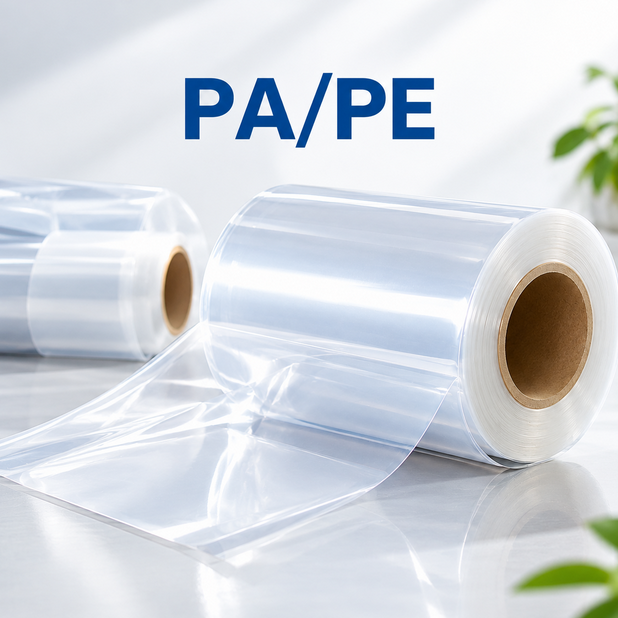
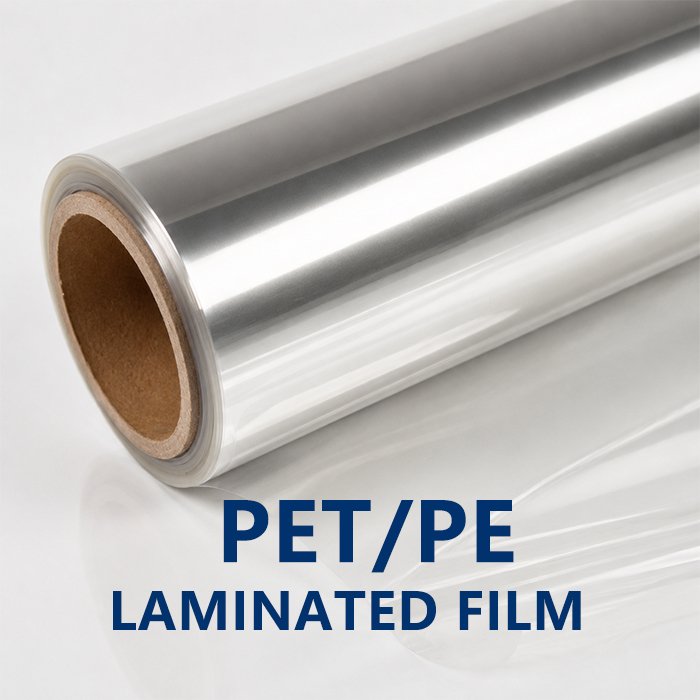
PET/CPP vs. PET/PE Laminated Film
Both PET/CPP and PET/PE use PET as the outer layer, so their main structural difference is the inner sealing film.
This makes the comparison particularly useful when a packaging buyer already knows that PET is appropriate for the outer layer but is deciding between CPP and PE for the inside.
| Consideration | PET/CPP | PET/PE |
|---|---|---|
| Outer Layer | PET | PET |
| Inner Layer | CPP | PE |
| Outer Film Characteristics | Strength, dimensional stability and smooth appearance | Strength, dimensional stability and smooth appearance |
| Sealing Layer | CPP | PE |
| Polymer Combination | Polyester outer layer + polypropylene inner layer | Polyester outer layer + polyethylene inner layer |
| Selection Focus | CPP sealing characteristics and polypropylene-based inner layer | PE sealing characteristics and the requirements of the packaging application |
The choice between PET/CPP and PET/PE should be based on the packaging process, sealing requirements, product characteristics and finished-package specifications.
PET/CPP vs. BOPP/CPP
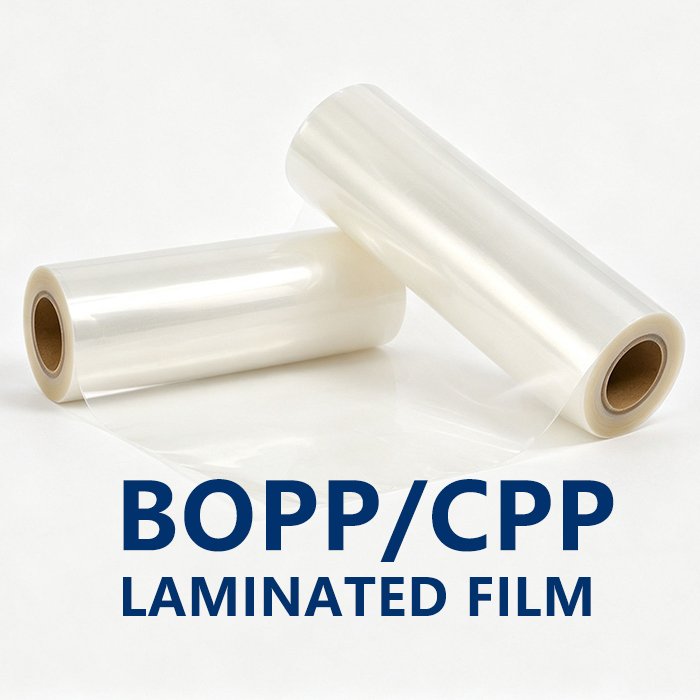
Another useful comparison is between PET/CPP and BOPP/CPP. Both structures use CPP as the inner sealing layer, but the outer film changes from PET to BOPP.
| Consideration | PET/CPP | BOPP/CPP |
|---|---|---|
| Outer Layer | PET | BOPP |
| Inner Layer | CPP | CPP |
| Outer Film Focus | Strength and dimensional stability | Clarity, stiffness and dimensional stability |
| Sealing Layer | CPP | CPP |
| Selection Focus | PET outer-film performance combined with CPP sealing | BOPP outer-film characteristics combined with CPP sealing |
Applications of PET/CPP Laminated Film
Flexible Packaging Bags
PET/CPP laminated film can be supplied in roll form for manufacturers producing flexible packaging bags where a stable PET outer layer and heat-sealable CPP inner layer are required.
Pouch Packaging
The structure can be considered for suitable pouch applications where PET provides the outer film and CPP provides the sealing surface.
Printed Consumer Packaging
The PET outer layer can provide a stable surface for suitable packaging graphics and printed information, depending on the selected film and printing process.
Dry Product Packaging
PET/CPP can be evaluated for suitable dry product packaging applications requiring a combination of outer-film stability and an inner heat-sealable layer.
Other Flexible Packaging Applications
Depending on the film grades, thickness and converting process, PET/CPP can be customized for other flexible packaging projects requiring this material combination.
Printing and Converting
The PET outer layer can be used for suitable printing applications. Film surface treatment, ink compatibility and the selected printing process should be considered when developing printed packaging.
After lamination, PET/CPP can be supplied as roll stock for further converting operations such as slitting, bag making and pouch production.
For a customized project, buyers should provide information about the artwork, printing method, finished package dimensions and converting equipment.
Custom PET/CPP Laminated Film
Film requirements vary according to the packaging product, equipment and finished package design. ZXCOOL can discuss customized PET/CPP laminated film specifications for B2B packaging projects.
| Customization | Available Options |
|---|---|
| Film Structure | PET / CPP |
| Film Thickness | Customized according to application requirements |
| Film Width | Customized according to production requirements |
| Roll Length | Customized according to order requirements |
| Printing | Custom printing according to packaging design |
| Roll Packaging | Customized according to shipping and production requirements |
What Information Should You Provide for a PET/CPP Film Quote?
Providing the application and converting requirements helps determine whether PET/CPP is suitable for the project and what film specification should be considered.
- Intended packaging application
- Finished bag or pouch dimensions
- Required film width
- Required total thickness
- Required roll length
- Printing requirements
- Sealing method
- Packaging machine information
- Estimated order quantity
For projects with specific sealing requirements, information about the sealing temperature and packaging equipment can also help when evaluating the appropriate CPP specification.
Frequently Asked Questions
What is PET/CPP laminated film?
PET/CPP laminated film is a two-layer flexible packaging structure consisting of PET as the outer layer and CPP as the inner layer. PET provides the stable outer surface, while CPP provides flexibility and heat-sealing performance.
What does CPP stand for?
CPP stands for Cast Polypropylene. It is a polypropylene film commonly used as a heat-sealable layer in flexible packaging structures.
Why is PET used as the outer layer?
PET can provide good mechanical strength, dimensional stability and a smooth outer surface, making it suitable for packaging applications where these characteristics are required.
Is PET/CPP heat sealable?
Yes. The CPP inner layer provides the heat-sealing function when the selected CPP grade and sealing conditions are appropriate for the packaging process.
What is the difference between PET/CPP and PET/PE?
The outer layer is PET in both structures. The difference is the inner sealing layer: PET/CPP uses CPP, while PET/PE uses PE. The appropriate choice depends on the packaging process and required material performance.
Can PET/CPP laminated film be printed?
Yes. The PET outer layer can be used for suitable packaging printing applications, subject to the selected film grade, surface treatment and printing process.
Can PET/CPP film be customized?
Yes. Film thickness, width, roll length and printing can be customized according to the packaging application and production requirements.
Request a Quote for PET/CPP Laminated Film
If you are sourcing PET/CPP laminated film for flexible packaging production, send ZXCOOL your required structure, thickness, width, roll length, printing requirements and intended application.
For projects with specific converting requirements, providing the packaging machine, sealing method and finished package dimensions can help us evaluate a suitable film specification.
Contact ZXCOOL to discuss your PET/CPP laminated film requirements and request a customized quotation.

Mike –
I’m a packaging procurement lead based in Chicago, and we’ve been sourcing flexible films for our snack food clients for over eight years. I came across ZXCOOL’s PET/CPP laminated film when we were looking for a reliable option for our ready-to-eat meal packaging line — something that could handle both retort conditions and high-speed form-fill-seal machinery without giving us headaches.
Honestly, I was a bit skeptical at first. We’ve worked with a handful of Chinese suppliers before, and the experience has been hit or miss — great samples, then inconsistent production runs, or communication that gets painfully slow once you’re past the initial order. But ZXCOOL has been a different story.
The sampling process was refreshingly straightforward. Their technical team asked the right questions upfront — what kind of food we’re packaging, what temperature our retort runs at, what printing resolution we need on the outer PET layer. They didn’t just send us a generic sample and call it a day. They actually adjusted the thickness and sealing layer formulation based on our specific machinery specs. The first sample arrived within a week, and we ran it through our standard torture tests — heat seal strength, puncture resistance, optical clarity after printing. It passed everything.
What really won me over, though, was the customization and communication throughout production. We needed a slightly narrower roll width than their standard offering to fit our existing slitting equipment, and they accommodated that without any fuss. They also caught a small detail in our artwork file that would’ve caused registration issues during gravure printing — something our previous supplier completely missed, costing us a whole production run. Their QC team flagged it before production even started. That kind of attention to detail is rare.
On the product quality side, the PET/CPP film performs exactly as advertised. The PET outer layer gives us excellent printability and stiffness for shelf appeal, and the CPP sealing layer delivers consistent, strong seals across a wide temperature window — which is critical when you’re running a high-speed line and the heat seal temperature can fluctuate a bit. We’ve run about 200,000 units through our packaging line with this film so far, and seal failure rate is practically zero. The film also handles retort sterilization beautifully — no delamination, no clouding, no seal weakening. For snacks and dry foods, it’s more than adequate in terms of barrier properties.
Price-wise, ZXCOOL sits right in the sweet spot. They’re not the cheapest option out there — and honestly, I wouldn’t want them to be, because you get what you pay for in this industry. But compared to the Korean and Japanese suppliers we evaluated, they’re about 15-20% more competitive for comparable quality. And compared to other Chinese suppliers in the same tier, their pricing is fair and transparent — no hidden surcharges, no last-minute adjustments.
I also appreciate that they’re straightforward about lead times. They quoted us 25 days for the first custom run and delivered in 23. No excuses, no delays. That kind of reliability matters when you’re coordinating with multiple clients and production schedules.
Bottom line: ZXCOOL is now on our approved vendor list for PET/CPP films, and we’re already discussing a larger contract for next quarter. If you’re in the market for laminated films and you care about consistency, responsive service, and a supplier that actually listens to your requirements, give them a shot. They’ve earned our trust.